- There’s something strange about the sudden surge in interest in the story of Joseph Kony. This is not to say that the Ugandan figurehead, tied closely to the Lord’s Resistance Army, isn’t worth wide notice (it certainly is). But we’ve gotten numerous requests to cover this story (being pushed by the charity group Invisible Children), and we feel like there’s a strange air around this tale, one that needs a touch of storytelling away from the activism, away from the social media that’s driving the narrative here. Continue on to read our breakdown of the phenomenon.
How Invisible Children started
- the story Film school graduate Jason Russell and his friends, Bobby Bailey and Laren Poole, went to war-torn Uganda without a script, and found something shocking: Thousands of children running away from home nightly to avoid capture by a rebel army.
- reaction The documentary served as a catalyst for the movement, seen by millions of people worldwide, and the filmmakers used the strong reaction to the film to build a charity that has raised millions for Uganda, along with awareness.
- currently The Invisible Children movement hit a major milestone in late 2011, as Congress agreed to send some U.S. soldiers to the region to help find Kony. However, long-term funding isn’t guaranteed. Hence, that’s why the group has started their current movement.
The subject of the campaign
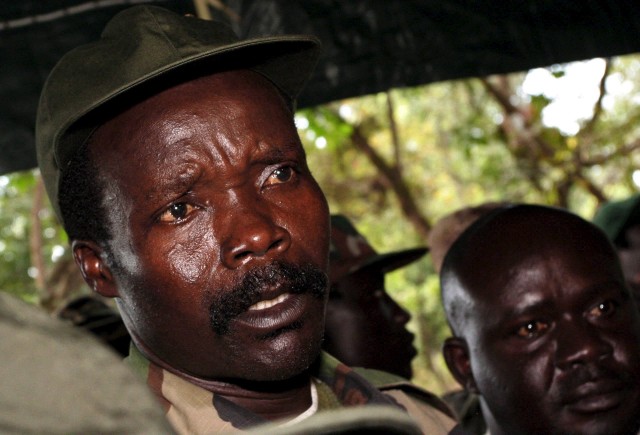
- For decades, Joseph Kony has led an army full of young children. The Lord’s Resistance Army founder and leader, who started his movement in Uganda but has spread into South Sudan and the Democratic Republic of Congo, leading an army with reportedly few trained soldiers but many children taken from their homes and forced to take part in the cult-like group that makes its mark through a reign of terror that includes mutilating people. “Kony is a cool person and looks like a normal human being,” said South Sudanese Col. Joseph Ngere in a 2009 BBC profile on the group. “When you meet him there is nothing about him that makes you think he is a murderer. But his mind is destabilised. He is not consistent, and changes the course of any discussion very rapidly. He is suspicious of everyone.”
The strange rules of the LRA
Mr. Kony did not ransom his captives. He had another design. He indoctrinated the boys as foot soldiers in a guerrilla campaign against the Ugandan government and, when directed by his sponsors in Sudan, against villages and rebel groups in Southern Sudan. Abducted girls were put to work, too — as labor, as soldiers, and, once they reached puberty, as sexual chattel for Mr. Kony and his coterie of commanders, who called them their wives.
New York Times reporter C.J. Chivers • Discussing the rise of Kony in a 2010 post on the Times’ At War blog. In the post, Chivers analyzes the documents breaking down the religious beliefs of the LRA leader, which Chivers describes as “a sort of L.R.A. code of conduct that mixed derivatives of Christianity, Islam, animism and what would seem a free association on guerrilla tactics, social justice, diet, marriage and capital punishment.” Sound confusing? It is, just a bit — for example, Army members can eat warthogs, but not pigs. The document also describes in-depth the rules on women held by the army, which sound disturbing. source
Looking in a broader context
- Why this was effective With a mix of of-the-moment social media references, slick production values and a soft-pedaling of a complex issue (Kony isn’t mentioned or explained until nearly a third of the way through the clip), the story encourages action by making the story as palatable to American tastes as possible — something which everyone can get behind, even if they don’t know anything about it. By watching, you feel like you’re part of something.
- What the trend shows What we’re seeing is a new hyperspeed kind of activism, where things move so quickly that you may not be able to keep up. Change.org has mastered the art of the emotional response/quick action type of protest, where petitions give way to tweets and Facebook messages. Suddenly, you’re hearing about it everywhere. The downside? The target changes daily, making it difficult to focus on longer-term issues like this one.
- Will this change things? It depends. The problem with social media campaigns is sustaining that audience after you’ve built it. The plan of action, as spelled out in the video, clearly implies a firm end date and a well-considered approach to viralness, one that uses Shepard Fairey as a template. The goal is to keep people thinking after a week, and to look at the issue on a level deeper than is getting explained in a 30-minute video — in a way that doesn’t use a child to sell the point.
- » Which is to say this: Don’t let a real, complex issue become a meme. Do your own homework on this. Understand it on a level that a charity like Invisible Children doesn’t get into. Remember: Activism can become an easy salve to serious problems, but what happens in a week, and then after April 20, when Invisible Children’s campaign fades into the ether? It’s easy to focus on something when it’s right in front of you. Do yourself a favor and use this as a spark, not a flash point. (And also, know what you’re getting into when you donate! Did you know that Jason Russell, the director and narrator of the above video, made $89,000 last year, and that’s 1 percent of the charity’s entire
fundraising expenses in 2011? See, good to know!)
 ShortFormBlog