Read a little. Learn a lot. • Now Mullenweg-free! • Since 2009
☰

Tag: health

284 posts

Aug 12 2011W

World: UK study: Cutting salt intake should be a global priority

  • 15% amount of salt the study suggests we should cut source
  • » Are food companies are pulling a fast one on us? According to the study, they've been adding extra salt to food to trick us into eating more. "They train your taste buds — the more salt you eat, the less salt you taste, the more salt you want, to get that saltiness," notes Professor Francisco Cappucio of the University of Warwick, one of the authors of the study. He notes that this extra salt makes us want to eat more, leading to higher food industry profits. By cutting salt intake worldwide, we could save thousands of lives each year in the U.S. alone, the study notes — and 8.5 million lives in the next decade. The study suggests that the UN get involved.
Posted by Justin Jones • Permalink

Jul 28 2011t

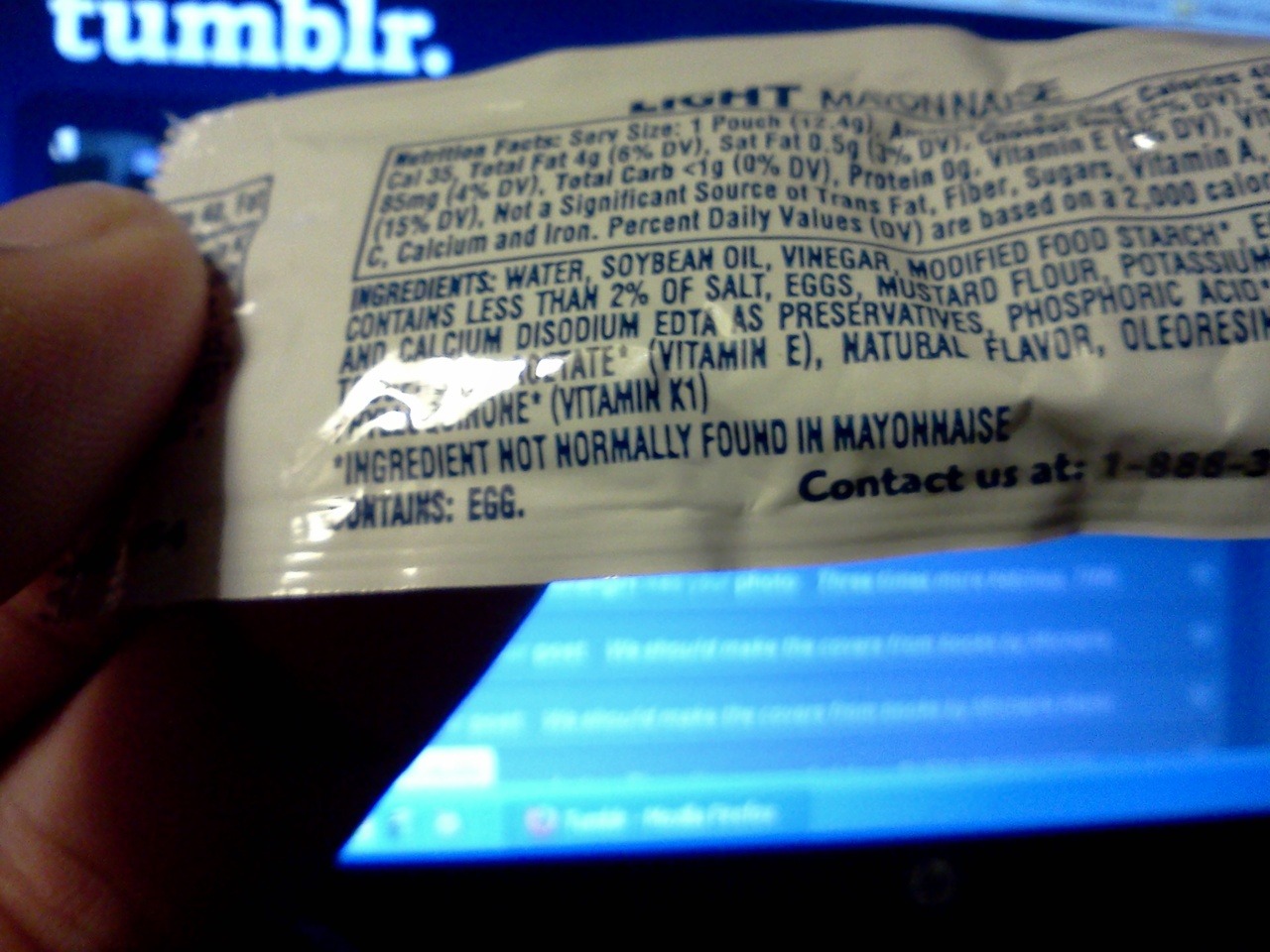
Please note the disclaimer, “Ingredient not normally found in mayonnaise,” then note that this disclaimer…

inothernews:

Please note the disclaimer, “Ingredient not normally found in mayonnaise,” then note that this disclaimer appears in an ingredient list for mayonnaise.

I once checked the ingredients label for a tub of watermelon slices, and all it said was: “Ingredient: Watermelon.” This is kind of the opposite of that.

Posted by ShortFormBlog • Permalink

Jul 21 2011W

World: Bill Gates wants to bring some big changes to the toilet

No innovation in the past 200 years has done more to save lives and improve health than the sanitation revolution triggered by invention of the toilet. But it did not go far enough. It only reached one-third of the world. What we need are new approaches. New ideas. In short, we need to reinvent the toilet.

Bill & Melinda Gates Foundation global development program president Sylvia Mathews Burwell • Offering two things: One, an opportunity for toilet humor (we'll pass), and two, an honest argument by Bill Gates' group that perhaps the sanitation industry hasn't gone far enough in the third world. So they want to figure out a way to take a device which the first world has taken for granted and improve its weaknesses, so that it works without a nearby sanitation mechanism, it's cheap and human waste is treated and somehow recycled or changed into a form which is harmless and doesn't spread disease. He has the money to do it, guys — let's just hope there aren't any blue screens of death that hit when you have to go. source

Posted by Ernie Smith • Permalink

Jul 6 2011W

World: In Iceland, you might need a prescription to smoke

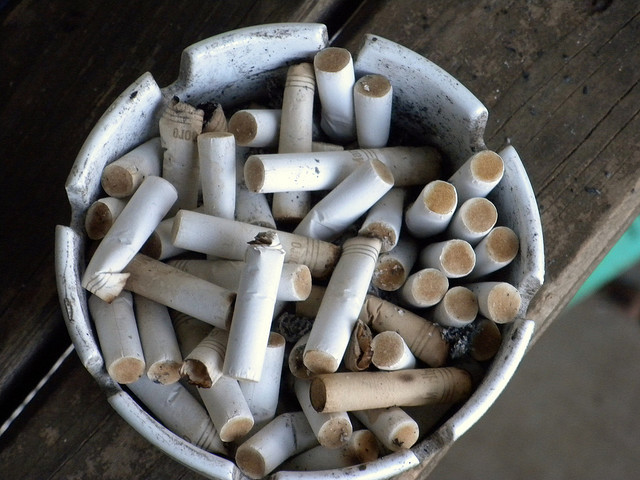
  • Your doctor may have to give you the go-ahead if you want to keep up the habit. Officials are hoping to do this as an effort to get people to quit. Recently, they've raised taxes on cigarettes and they're on the way to banning them in many public places. Under the proposal, smokers would have to go through treatment programs to try to kick their habit. If they couldn't pull it off, they'd get prescribed cigarettes. This seems like a bit far to reach, if you ask us, and it could create a black market because it's so restrictive. Regardless, it should help people quit, should this measure pass —because that's a lot of trouble to go through for a smoke. (photo via Flickr user mamagrrl) source

Posted by Justin Jones • Permalink

Jun 30 2011W

U.S.: FDA decides against controversial breast cancer drug

  • 6-0 vote to take the breast cancer indication off Avastin source
  • » Even though lots of people liked the drug, the FDA has decided that it shouldn't be used to treat breast cancer. However, European regulators allowed its use (as long as it was with another drug) at essentially the same time — which begs the question, why would the FDA be taking a drug off the market that so many people felt so passionate about?

Posted by Justin Jones • Permalink

Jun 28 2011W

U.S.: Cancer drug might not be around much longer

Avastin saved my life...The studies are saying, they're saying that people didn't live for more than five months, you know. And there has to be other people like me that it works on.

Kerry Harrington, a breast cancer survivor • Arguing for the case for Avastin, a drug still being tested that treats breast cancer. The drug received accelerated approval for treating breast cancer, but now the FDA is backing away from allowing the drug for breast cancer treatment. This is mainly because Avastin has some pretty horrible side effects, like heart attacks and kidney damage. Many women are saying that the pros outweigh the cons — they'd rather deal with the side effects and know they're treating their cancer. The FDA will decide after they hear testimony from patients and review other official data. source

Posted by Justin Jones • Permalink

Jun 23 2011W

U.S.: Arizona man's death possibly due to German E.coli outbreak?

  • The man reportedly visited Germany recently. The rare and dangerous form of E.coli in Germany, first discovered in May has already killed dozens of people in Europe. Now, it's possible the epidemic has killed an American. Tests are still pending to see if it is that extra-deadly strain of E coli has made it stateside. But he wouldn't be the first person to bring the bug home with them to the U.S. — on top of sickening over 3,800 Europeans, the disease has hit recent travelers from Massachusetts, Michigan, Wisconsin and North Carolina. source

Posted by Justin Jones • Permalink

Jun 15 2011W

Biz: FDA takes steps to make sunscreen more consumer-friendly

  • beforeSunscreen was pretty misleading. The SPF only referred to how well the sunscreen protected against UVB rays, completely neglecting the still-harmful UVA rays. There were also a few false claims on those bottles of sunscreen — mainly those calling it waterproof.
  • afterNew requirements will make sunscreens much more consumer-friendly. SPF will tell how well the sunscreen protects against UVA and UVB rays. Sunscreen won't be called sunblock, nor will it be called waterproof or sweatproof — no sunscreen really is. source

Posted by Justin Jones • Permalink

Jun 15 2011W

U.S.: Living in the U.S. takes a toll on your life, apparently

  • 75.6 average life expectancy, in years, for a man in the United States
  • 80.8 average life expectancy, in years, for a woman in the U.S. source
  • » Not so bad, right? It doesn't seem like it — until you start comparing us to other countries. Compared to an average of the countries with the 10 best life expectancies, American men live roughly 13 years less and women live 16 years less. Not only does living in the U.S. mean you may not live as long, but if you live in Appalachia, the deep South, or in northern Texas, you can expect a lower life expectancy than anywhere else in the country. People tend to live longest on the Pacific coast and the Northern Plains. What is ironic about all this is that the U.S. spends more money on health per person than any other country in the world — so what's wrong?

Posted by Justin Jones • Permalink