Read a little. Learn a lot. • Now Mullenweg-free! • Since 2009
☰

Tag: economics

22 posts

Dec 20 2011W

U.S.: Unemployment fell in majority of states last month

  • 43 states have seen a decrease in unemployment since October source
  • » As goes the country, so go the states: Or maybe it's the other way around? Well, either way, figures released today by the Department of Labor show that unemployment, in addition to falling to its lowest level in two and a half years at the national level, also decreased on a state-by-state basis in all but seven states. This is promising, as it suggests that the uptick in employment is a nationwide trend, and not the result of, say, five or ten states doing abnormally well for one reason or another. Note: The usual disclaimers about the problems with how unemployment is calculated apply.

Posted by Seth Millstein • Permalink

Nov 5 2011t

Decoder & The Fool: Why "Bank Transfer Day" will make protesters AND banks very, very happy

dcdecoder:

Editor’s Note: This is the third in a weekly series of talks between Decoder and The Motley Fool columnist Morgan Housel. You can find all of Housel’s Fool columns, including his most recent, “How succesfull will Bank Transfer Day be?,” here. Read last week’s talk the potential for labor to have its day in the sun here.

\1. Perhaps thousands of Americans will transfer their money from for-profit banks to not-for-profit credit unions by this Saturday. (Read up on “Bank Transfer Day” here and read Housel’s column on it here.) But you think this may end up working out for banks AND customers. Why?

Housel: One of the drivers behind [Bank Transfer Day] is people trying to teach banks a lesson. The irony of that is since the financial crisis, and especially over the last three months as there has been a panic about Europe… banks have been inundated with cash deposits. They’ve been seeing a higher inflow of deposits than they can turn into loans. [more]

Are you taking part in Bank Transfer Day? It’s tomorrow. We’re curious about what’s going to happen.

Posted by ShortFormBlog • Permalink

Oct 19 2011t

Rick Perry says

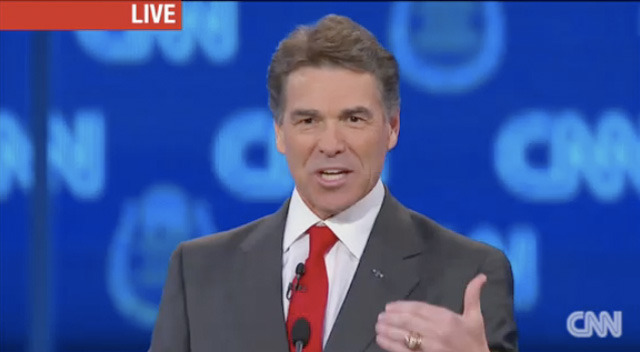
Rick Perry says we shouldn’t be worrying about Herman Cain’s 9-9-9 plan so much as one 9; the nation’s 9% unemployment. This is a tricky tact for Perry to take, however, as he has yet to release any detailed economic platform, beyond his general call for “energy independence,” which drew cheers from the crowd but is yet pretty vaguely defined.

Be sure to check out all the further debate coverage over at DC Decoder!

Posted by ShortFormBlog • Permalink

Sep 15 2011t

So, to put this another way

pol102:

Employment: Defending jobs | The Economist

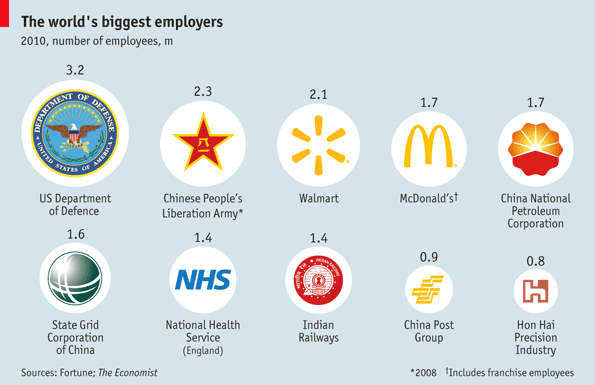
Looking for a job? These are the world’s top ten employers. Welcome to the new global economy.

So, to put this another way: Pick your poison — communism, socialism, military, Big Macs or iPhones. (Hon Hai is better known as Foxconn, the company that builds many of Apple’s products.) It’s fascinating to see this in perspective.

Posted by ShortFormBlog • Permalink

Aug 4 2011W

U.S.: Amid negative economic data, stock market having a really crappy day

  • 350+point dip in the Dow at one point today (ouch) source
  • » It's becoming more and more apparent that we might be heading for a double-dip recession here. The Dow fell for eight days straight, only ending the losing streak yesterday — but it could fall steeply today. The new jobless numbers are mostly to blame for the weak market. There were 400,000 new unemployment claims in the week that ended July 30. That, in addition to a spreading debt crisis in Europe, has been enough to convince investors that the U.S. economy isn't in a great spot right now, and it's hurting our stock market bad.

Posted by Justin Jones • Permalink

Jul 27 2011W

U.S.: Pew study: There's a massive wealth gap along racial lines

  • $113,149 average net worth of a white household in 2009
  • $5,677 average net worth of a black household in 2009 source
  • » That is a stark difference. In their latest study, Pew compared the net wealth of families in various racial groups and found that blacks and Latinos in particular did very poorly compared to whites. (Asians, on the other hand, were somewhat within shouting distance. EDIT: Please see explanation.) This is a historic trend which has lasted decades, but has become all the more apparent with the Great Recession. "The bursting of the housing market bubble in 2006 and the recession that followed from late 2007 to mid-2009 took a far greater toll on the wealth of minorities than whites," Pew writes in its study. While net wealth among whites fell roughly 16 percent, blacks families lost about 53 percent, and Latino families lost the most — losing 66 percent of their wealth on average.

Posted by Justin Jones • Permalink

Jun 15 2011W

Politics: Pawlenty's extreme tax proposal

  • 73% Pawlenty's tax cut for the 400 richest Americans source
  • » During his time as Minnesota's governor, Tim Pawlenty staked out a few moderatestances. This is understandable, as Minnesota is a moderate state. But moderation doesn't fly in the current incantation of the Republican party (just ask Mike Castle or Bob Bennett). It especially doesn't fly for Republicans who want to be President, and perhaps no position is as sacrosanct to the modern Republican party as that of low taxes. Still, Pawlenty's proposed tax plan is really extreme, even by supply-sider standards; for example, he proposes that millionaires alone receive a 41% tax cut. So, while it's understandable that T-Paw wants quell the concerts of Republican primary voters by tacking to the right, we wonder if he really needed to adopt a tax plan that, in the words of Ezra Klein, "makes George W. Bush look like Robin Hood."

Posted by Seth Millstein • Permalink

Jun 6 2011W

Politics: Obama's head economics guy is headed out the door

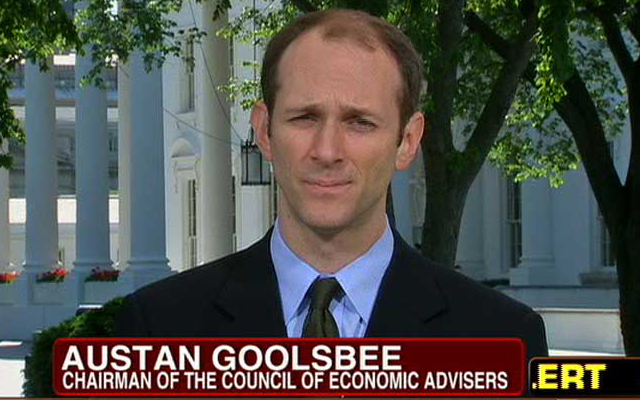
  • Goodbye, Goolsbee: Austan Goolsbee, Obama's chief economic advisor and the only guy in Washington who spells "Austan" with an "a," is leaving the White House to resume teaching in Chicago. It's a coincidence that the administration happened to announce this news today, when it was certain to be drowned out by the torrent of Anthony Weiner stories. I mean, it's not like the White House is nervous that Goolsbee's departure might create a perception of uncertainty regarding their grasp of the economy, right? Nah. source

Posted by Seth Millstein • Permalink

Apr 27 2011W

Politics: I know nothing of which I speak, yet I speak nonetheless

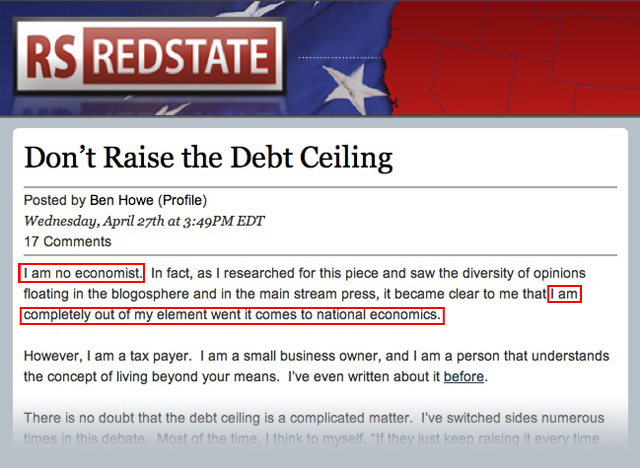
  • Pro-tip: Don't preface your argument by proclaiming that you don't know what you're talking about. The premise in this RedState piece is that we can "common sense" our way out of any political impasse that comes our way, complexity be damned. This is a dangerous way to go about public policy. "Without a strong position among those on my side of the aisle, and with my limited economic understanding that I mentioned earlier, I must revert to what rarely fails me: My gut." If you lack enough information to form an opinion, either educate yourself more or recuse yourself from the debate. Comprehending the ramifications of raising the debt ceiling require a basic, if not advanced, level of economic knowledge, and to advocate for a one view or another without this knowledge is both intellectually and journalistically disgraceful. source

Posted by Seth Millstein • Permalink