Read a little. Learn a lot. • Now Mullenweg-free! • Since 2009
☰

Tag: coupons

17 posts

Jun302023t

» Wanna learn more?

Where Do the Coupons Go? 🛒

In the 1950s, a manufacturer’s coupon clearing house had a problem: How do we get rid of all these used coupons? They actively destroyed the local environment until they found a good solution.

So, I do this thing where I publish a shorter version of Tedium on different outlets like Substack and LinkedIn. I call it Lesser Tedium, and I’m going to try it here. If you like it, subscribe to Tedium here. If you think it sucks, leave an angry comment, so I feel the depth of your anger.
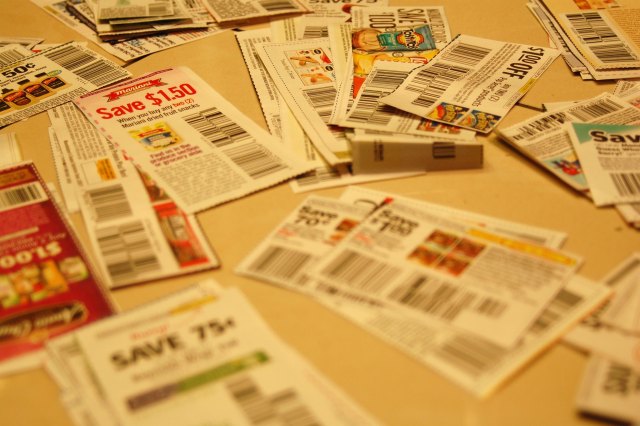
If you’ve ever gone to a grocery store in search of a deal, odds are you’ve leveraged the lasting power of the manufacturer’s coupon.

It was essential for manufacturers and retailers alike to get people to go into stores. But these paper devices of commerce had to go somewhere.

Where did they go? Easy: They were shipped off to Clinton, Iowa, a town about an hour outside of Davenport. At least in the 1950s, that was the home of the Nielsen Coupon Clearing House, a firm that essentially existed to do for coupons what a bank clearing house did for checks.

There was just one problem—what were they going to do with all the used-up coupons? Sure, recycling was an option, and so was shredding, but the solution that 1950s Iowa came up with was much more depressing: The company went to the local hospital, which had an incinerator, and burned them.

Per a 1958 issue of the industry magazine Sponsor, NCCH was burning as many as 10 million coupons a week. At first, the clearing house’s general manager, Kurt Tischler, tried burning the coupons in the company’s own furnace, but that just sprayed ash everywhere and got the mayor of Clinton to come to the plant and complain.

So that was when they made a deal with the veteran’s hospital to burn the coupons. Legally, the government employees were not allowed to be paid by a private business for unrelated work, so the hospital workers essentially turned a blind eye to the incinerator.

Eventually, they had to stop doing that, too, and then did other deeply damaging things to the local environment—grinding up the paper to shove into the local sewer line, which also ticked off Clinton’s mayor, and then burning the materials in an abandoned quarry.

Finally, the solution they came up with:

Finally, Tischler bought something called a PEGAR. This is used by the government for getting rid of classified material. It adds water to the coupons and turns them into pulp. The pulp is then put into sacks and taken to the city dump. Now, everything’s fine. Of course, coupons made of foil are another problem.

Just remember: There was once a time when recycling was not the obvious solution, and you had people willing to trash the local economy instead.

» Wanna learn more? Check out our 2021 piece on the rise of manufacturers’ coupons, which may be the only thing keeping some newspapers in business.

Posted by Ernie Smith • Permalink

Aug102012t

J.C. Penney's forward-thinking pricing strategy not working so well

  • cause In January, new J.C. Penney CEO Ron Johnson announced an innovative plan to cut back on marketing by trimming overall prices and cutting back on coupons. The strategy was initially lauded.
  • effect But … after more than six months of the strategy, it’s proving difficult to show any positives. Sales are down 21.7 percent in the most recent quarter, and revenue is also down by 22.6 percent.
  • retreat? While Johnson is sticking behind the basic idea, saying sales will bounce back in 2013, he has done some backtracking in recent weeks — the store will begin using words like “clearance” again. source
  • » The problem — no coupons? Analysts are skeptical about whether consumers will actually respond to the changes Johnson’s making — particularly because they’ve been trained to use coupons. "I am very skeptical as to whether he (Johnson) understands that the J.C. Penney customer is looking for value and perceives value only with couponing,“ says Walter Loeb of Loeb Associates, who feels that competition with Macy’s is making J.C. Penney’s position tough to keep.

Posted by ShortFormBlog • Permalink

May152012t

Groupon has its first profitable quarter ever; stock at discount price

  • $16.3 million in profit; revenue leaped 89 percent source
  • $230 million the amount the company spent on marketing in the year-ago quarter, which investors criticized
  • $117 million the amount the company spent this past quarter; that’s what we call cutting the fat source
  • » New tech behind improved standing: Despite the company having a fairly mature North American market, Groupon still managed to have a 33 percent increase in its business in the region, thanks in large part to a push to in the direction of mobile apps and the use of relevance-boosting techniques like SmartDeals. Still, $16.3 million in profit (2 cents a share) seems kinda low when we’re talking revenue of $559.3 million, though it beat investor estimates. Their stock price is still far below its $20 IPO, even with the boost due to the good news from these results.

Posted by ShortFormBlog • Permalink

Nov32011W

Biz: Groupon's IPO downsizes, then upsizes again (just a little bit)

  • $13.3 billion Groupon valuation ahead of their IPO
  • $20 the cost of Groupon's shares during its upcoming IPO
  • 35M the number of shares the company plans to sell, up from 30 million
  • $700M the amount of money the company plans to raise with the IPO source
  • » It was supposed to be way higher than this: Back when Groupon first floated the idea of their IPO, the expected valuation was $15 to $20 billion, a number which threw investors off and led to allegations that 1) they were overhyped, 2) Groupon was an elaborate ponzi scheme and 3) their IPO is a sign that a fresh tech bubble is on the way. They backed off some of the higher valuations, but then set the price at $20 per share, instead of the expected $16-18. When it finally hits, it's going to be an interesting ride, to say the least.

Posted by Ernie Smith • Permalink

Jun22011W

Biz: Does Groupon's IPO suggest a bubble ready to pop?

I think investors will go for this one. Whether or not it's worth the valuation it comes at is still an open question.

Jacob Funds chairman Ryan Jacob • Asking a fair question about Groupon's IPO, which the company expects to raise three quarters of a billion dollars, and could put the company's valuation in the tens of billions. Are we in another tech bubble? Probably. If it pops, will it pop on the day Groupon hits the stock exchange? Probably not. Still though — Groupon has only been around for a little over two years (yet it feels like much longer), so they're the ones who'll probably get more scrutiny than anyone else here. source

Posted by Ernie Smith • Permalink

Feb112011W

Biz: Groupon listens to angry people, takes controversial ads off air

Five days have passed since the Super Bowl, and one thing is clear – our ads offended a lot of people. Tuesday I posted an explanation, but as many of you have pointed out, if an ad requires an explanation, that means it didn’t work.

Groupon CEO Andrew Mason • Being forced to back down on those cause-mocking Super Bowl ads which seem to have pissed off just about everybody. Within the next day or so, they're going off the air, kids. " We thought we were poking fun at ourselves," he continued. but clearly the execution was off and the joke didn’t come through." Mason says he personally takes blame for approving the ads. (thanks abcworldnews) source

Posted by Ernie Smith • Permalink

Feb82011W

Culture: Groupon CEO Andrew Mason tries to explain awful ad campaign

Not a single person watched our ad and concluded that it’s cool to kill whales. In fact – and this is part of the reason we ran them – they have the opposite effect.

Groupon CEO Andrew Mason • Attempting to explain that his company's controversial Super Bowl ads were in fact – IN FACT – meant to be respectful to other cultures and environmental causes. "The last thing we wanted was to offend our customers – it’s bad business and it’s not where our hearts are," Mason concluded. Too bad nobody took the ads that way. Commenters on the blog post are savaging him and the company for trying to be a little too clever with its commercial approach without explaining its reasoning. They could've saved themselves a lot of trouble had they actually put a domain name on the ad somewhere. source

Posted by Ernie Smith • Permalink

Feb62011W

Culture: Groupon wins award for worst ad campaign of the night

  • In case you haven't seen this hot mess, here you go. Groupon just exploited the Tibetian people to sell its wares, an advertising strategy not seen since, well, ever. While Groupon does have a point, you have to get all the way to this site to find it. The odds that people will reach this site and see the joke: Zilch. Way to go, Groupon. source

Posted by Ernie Smith • Permalink