Read a little. Learn a lot. • Now Mullenweg-free! • Since 2009
☰

Tag: africa

66 posts

Apr 10 2012t

End of an Era in Zimbabwe?..Don't Count on it

pol102:

This is an interesting development. Worth keeping an eye on it. Transitions from sultanistic regimes are never easy—or pretty.

From clubrelaford:

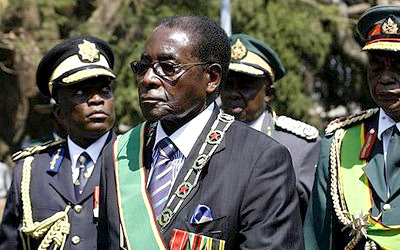
Zimbabwean dictator Robert Mugabe was yesterday said to be fighting for his life in a Singapore hospital with an undisclosed illness, amid reports he had agreed to hand over power to his feared Defence Minister Emmerson Mnangagwa.

The Zimbabwe Mail, quoting a senior official of Mugabe’s ZANU-PF party, said the President was undergoing intensive treatment in Singapore and that some members of his family had joined him after boarding a chartered private jet on Saturday.

Continue reading HERE

Of the world’s leaders, few have as bad a reputation as Mugabe, he of hyperinflation and questionable political tactics. So we’ll be watching this one closely.

Posted by ShortFormBlog • Permalink

Apr 7 2012t

A new female leader in Africa

Malawi: Joyce Banda becomes African continent’s third-ever female head of state

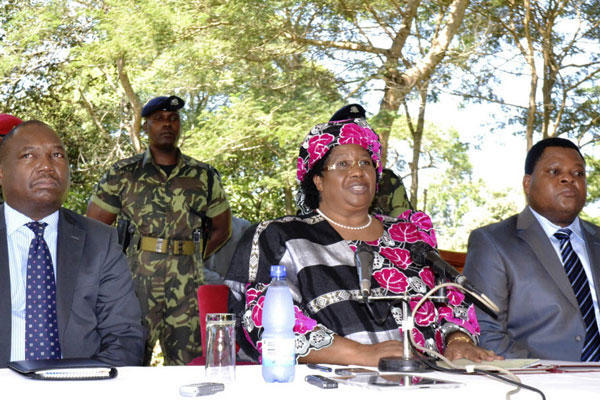
A new female leader in Africa: Joyce Banda, the vice president of Malawi, was sworn in as president Saturday, two days after the death of the country’s longtime leader, Bingu wa Mutharika. "I call upon all Malawians to remain calm and to keep the peace during this time of bereavement,“ she said. Though there were political concerns which threatened to prevent Banda from taking power — she had been removed from her party, though held onto her vice-presidential post — but when all was said and done, Banda was sworn in, a fairly smooth transition for a country in need of one. Banda is the continent’s third-ever female leader, following in the footsteps of Ethiopian Empress Zewditu and Liberian President Ellen Johnson Sirleaf. (photo by Mabvuto Banda/Reuters)

Posted by ShortFormBlog • Permalink

Apr 6 2012t

Malawi faces major political challenges after president's death

  • thursday Malawi’s longtime president, former World Bank official Bingu wa Mutharika, died Thursday after suffering a heart attack at his home in the capital of Lilongwe.
  • friday Perhaps a reflection of the government's fragility Mutharika's death hasn’t been announced, though it’s been confirmed by medical and diplomatic sources in the past day.
  • next? Mutharika’s vice-president, Joyce Banda, is constitutionally next in line for to lead the African nation, but she was booted out of her party, causing issues. source

Posted by ShortFormBlog • Permalink

Mar 7 2012t

Joseph Kony, Invisible Children and the rise of quick social activism

  • There’s something strange about the sudden surge in interest in the story of Joseph Kony. This is not to say that the Ugandan figurehead, tied closely to the Lord’s Resistance Army, isn’t worth wide notice (it certainly is). But we’ve gotten numerous requests to cover this story (being pushed by the charity group Invisible Children), and we feel like there’s a strange air around this tale, one that needs a touch of storytelling away from the activism, away from the social media that’s driving the narrative here. Continue on to read our breakdown of the phenomenon.

How Invisible Children started

  • the story Film school graduate Jason Russell and his friends, Bobby Bailey and Laren Poole, went to war-torn Uganda without a script, and found something shocking: Thousands of children running away from home nightly to avoid capture by a rebel army.
  • reaction The documentary served as a catalyst for the movement, seen by millions of people worldwide, and the filmmakers used the strong reaction to the film to build a charity that has raised millions for Uganda, along with awareness.
  • currently The Invisible Children movement hit a major milestone in late 2011, as Congress agreed to send some U.S. soldiers to the region to help find Kony. However, long-term funding isn’t guaranteed. Hence, that’s why the group has started their current movement.

The subject of the campaign
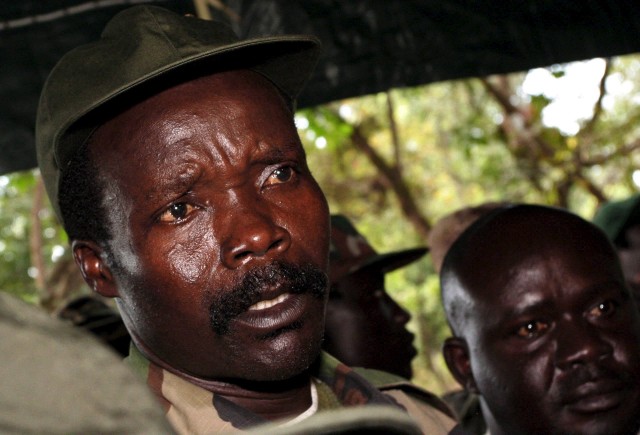
  • For decades, Joseph Kony has led an army full of young children. The Lord’s Resistance Army founder and leader, who started his movement in Uganda but has spread into South Sudan and the Democratic Republic of Congo, leading an army with reportedly few trained soldiers but many children taken from their homes and forced to take part in the cult-like group that makes its mark through a reign of terror that includes mutilating people. “Kony is a cool person and looks like a normal human being,” said South Sudanese Col. Joseph Ngere in a 2009 BBC profile on the group. “When you meet him there is nothing about him that makes you think he is a murderer. But his mind is destabilised. He is not consistent, and changes the course of any discussion very rapidly. He is suspicious of everyone.”

The strange rules of the LRA

Mr. Kony did not ransom his captives. He had another design. He indoctrinated the boys as foot soldiers in a guerrilla campaign against the Ugandan government and, when directed by his sponsors in Sudan, against villages and rebel groups in Southern Sudan. Abducted girls were put to work, too — as labor, as soldiers, and, once they reached puberty, as sexual chattel for Mr. Kony and his coterie of commanders, who called them their wives.

New York Times reporter C.J. Chivers • Discussing the rise of Kony in a 2010 post on the Times’ At War blog. In the post, Chivers analyzes the documents breaking down the religious beliefs of the LRA leader, which Chivers describes as “a sort of L.R.A. code of conduct that mixed derivatives of Christianity, Islam, animism and what would seem a free association on guerrilla tactics, social justice, diet, marriage and capital punishment.” Sound confusing? It is, just a bit — for example, Army members can eat warthogs, but not pigs. The document also describes in-depth the rules on women held by the army, which sound disturbing. source

Looking in a broader context

  • Why this was effective With a mix of of-the-moment social media references, slick production values and a soft-pedaling of a complex issue (Kony isn’t mentioned or explained until nearly a third of the way through the clip), the story encourages action by making the story as palatable to American tastes as possible — something which everyone can get behind, even if they don’t know anything about it. By watching, you feel like you’re part of something.
  • What the trend shows What we’re seeing is a new hyperspeed kind of activism, where things move so quickly that you may not be able to keep up. Change.org has mastered the art of the emotional response/quick action type of protest, where petitions give way to tweets and Facebook messages. Suddenly, you’re hearing about it everywhere. The downside? The target changes daily, making it difficult to focus on longer-term issues like this one.
  • Will this change things? It depends. The problem with social media campaigns is sustaining that audience after you’ve built it. The plan of action, as spelled out in the video, clearly implies a firm end date and a well-considered approach to viralness, one that uses Shepard Fairey as a template. The goal is to keep people thinking after a week, and to look at the issue on a level deeper than is getting explained in a 30-minute video — in a way that doesn’t use a child to sell the point.
  • » Which is to say this: Don’t let a real, complex issue become a meme. Do your own homework on this. Understand it on a level that a charity like Invisible Children doesn’t get into. Remember: Activism can become an easy salve to serious problems, but what happens in a week, and then after April 20, when Invisible Children’s campaign fades into the ether? It’s easy to focus on something when it’s right in front of you. Do yourself a favor and use this as a spark, not a flash point. (And also, know what you’re getting into when you donate! Did you know that Jason Russell, the director and narrator of the above video, made $89,000 last year, and that’s 1 percent of the charity’s entire fundraising expenses in 2011? See, good to know!)

Posted by ShortFormBlog • Permalink

Feb 29 2012t

Some sort of dog/pig thing is attacking a small town in northern Nambia, according to local residents. "This…

Some sort of dog/pig thing is attacking a small town in northern Nambia, according to local residents. “This is an alien animal that the people have not seen before. We don’t have a forest here, only bushes,” Nambian official Andreas Mundjindi claimed. “So, this must be black magic at play." Think this, except not cute.

Posted by ShortFormBlog • Permalink

Jan 30 2012t

The International Committee of the Red Cross has repeatedly betrayed the trust conferred on it by the local…

The International Committee of the Red Cross has repeatedly betrayed the trust conferred on it by the local population and, in the recent weeks, falsely accused the Mujahideen (Shabaab fighters) of hindering food distribution.

— A statement from al-Shabaab • Discussing its decision to bar the Red Cross from the parts of Somalia it controls. That’s right: al-Shabaab is blocking humanitarian aid from being distributed over accusations by the Red Cross that they’re already blocking humanitarian aid from getting distributed. You can’t make this stuff up.

Posted by ShortFormBlog • Permalink

Dec 29 2011W

World: Wildlife group: Despite worldwide ban, ivory seizures hit record levels in 2011

  • 23 tons amount of ivory acquired from 13 major seizures in 2011
  • 2,500+ number of elephants that died to produce that much ivory source
  • » This despite a global ban on ivory trade: What's causing the black-market trade of ivory? According to Traffic, a group that monitors wildlife trading, much of this is as a result of larger Asian influence on the continent. "We've reached a point in Africa's history where there are more Asian nationals on the continent than ever before," said Traffic official Tom Milliken, based in Zimbabwe. "They have contacts with the end-use market and now they are at the source in Africa. This is all adding up to an unprecedented assault on elephants and other wildlife."

Posted by Ernie Smith • Permalink

Dec 27 2011t

South Sudan, the world's newest nation, is prepping its own U.S. embassy as we speak.

They’re doing everything on their own, without the help of high-powered lobbyists. “Our country’s people have such a long story of struggle,“ noted Deng Deng Nhial, the deputy head of the mission to launch the embassy. "Explaining our story will be the work of the embassy — introducing Washington and the community of nations to South Sudan and letting them know we are not just about war anymore. We are open for business.” High-fives to our new South Sudanese neighbors!

Posted by ShortFormBlog • Permalink

Dec 10 2011W

World: Three women — two Liberian, one Yemeni — accept Nobel Peace Prize

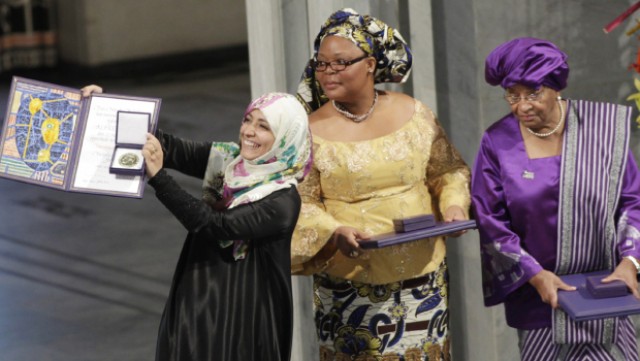
  • Three examples of strong female peace-fighters: On Saturday in Oslo, the three winners of this year's Nobel Peace Price — from left, Yemeni Tawakkol Karman, Liberian activist Leymah Gbowee and Liberian president Ellen Johnson-Sirleaf — accepted their honors. The three women were chosen together as a reflection of women's rights at large. Karman's case is particularly of note — at 32 she is not only the youngest winner of an award, but also the first Arab woman, one reflective of this year's Arab Spring movement. Gbowee, meanwhile, led an anti-rape campaign in her country; and Johnson-Sirleaf went a long way in easing tensions by leading the country past a long civil war. Congrats to all three. (Photo via AP) source

Posted by Ernie Smith • Permalink