YESthe Libyan rebels have a mobile phone network source
» Welcome to Free Libyana: With international support, in particular the help of a telecom executive in Abu Dhabi named Ousama Abushagur, the Libyan rebel forces now have a hijacked mobile phone network operating within the eastern part of the country. The network, called Free Libyana, was built on the equipment foundations of a Gaddafi controlled network called simply Libyana. Mr. Abushagur, a Libyan who was raised in Alabama, led a crew of engineers and some bodyguards into Benghazi in order to secure the network for the rebel forces located there.
This is a big deal for the opposition council. The Libyan rebel government's deal with Qatar to export oil has obvious benefits to their cause, and they aren't strictly economic. One aspect of the Libyan struggle we can't overlook is the need for others to perceive their legitimacy — the more the rebellion shows a unified, proactive, and competent front, the more pressure it may put on Gaddafi's beleaguered allies to desert him. The immediately refused rebel ceasefire offer was a good example, and this follows suit — the practical proof that oil exports can resume despite Gaddafi's efforts to the contrary is another psychological victory against a regime that's already reported as suffering key defections by officials. source
30%of Gaddafi military capacity destroyed by airstrikes source
» That's what NATO says, at least. NATO Brigadier General Mark van Uhm made the claim to a bunch of reporters in Brussels. That said, though, some of Gaddafi's tactics have made it harder for NATO to attack. "The operational tempo remains, but we have seen a change of tactics (from Gaddafi)," van Uhm said. "When human beings are used as shields we don't engage."
The necessary concessions are laid out: Protests against Muammar Gaddafi must continue safely, as must a process to replace the longtime dictator be agreed upon, if the Libyan rebellion is to halt its fight. The offer has already been rejected by the Gaddafi government, but this does have interesting implications for the reported mounting defections. The more the rebellion strikes the pose of a unified front with organized leadership and goals, as they have here, it may turn up the pressure on officials mulling whether they can ride this out or not. Also, it's heartening from a foreign relations standpoint to see a few American flags in that crowd at the end. source
This is looking pretty significant: Al Jazeera reports that yesterday's high-profile defection by former Libyan Foreign Minister Moussa Koussa is no isolated incident. They say that four senior Libyan officials are outside the country (with Tunisia as a likely location), and have no intention to return. Without overstating the case, this is very welcome news. The more high-ranking internal support Gaddafi loses, the harder it should become for him to demand the sort of loyalty that's needed to commit these atrocities on an international stage. source
NOMoussa Koussa was not offered immunity to defect source
» So say British officials: Koussa, the former Libyan Foreign Minister who defected yesterday, had been a cornerstone of the Gaddafi regime dating back to the 1969 revolution. As such, it wasn't unreasonable upon learning of his defection to wonder just how dirty his hands were. The prosecutor of the International Criminal Court lists Koussa as having had command control over Libyan forces suspected of "crimes against humanity" during his long career as Gaddafi's confidant. If he has indeed defected with no assurance of legal immunity, that might be indicative of how Gaddafi's inner circle is feeling right now. Here's hoping more of these dominoes start to fall.
ground gained by gaddafi: The Libyan rebellion is retreating in the face of heavy artillery and tank fire, as Muammar Gaddafi's forces have retaken Breja. The rebels are heading back to Ajdabiya, which was where they were situated before the start of the NATO air strikes. As the international community mulls whether to actively provide arms to the rebel movement, Gaddafi's ground attack seems to be prevailing despite being the lack of aerial support. That said, this conflict is nothing if not fluid, so it's wise to stay abreast of new information. source
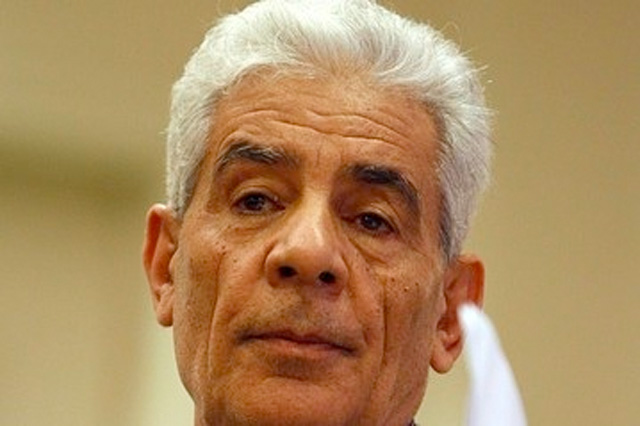
Gaddafi suffers high-profile defection: This man, Moussa Koussa, was the Foreign Minister in Libya. That ended today as Koussa, who according to Britain's Foreign Office was "one of the most senior figures in Gaddafi's government," defected from Libya and flew into the UK's Farnborough Airport. British officials say that he left of his own free will, and that he was no longer willing to act as an international representative of Gaddafi's Libya. With recent reports suggesting tough losses for the rebels (while world leaders mull more active arms support), any news of Gaddafi's officials defecting makes us hopeful for an internal weakening of his command. source
Was Libyan military aid authorized? It's being reported that President Obama signed an order, called a "finding," which is effectively a secret authorization to militarily support the Libyan rebellion. The process is said to generally be used for secret CIA authorizations. The administration has gone to staggering lengths to avoid the perception that the Libyan intervention was an American decision rather than an international one, for reasons of perception both domestic and worldwide. This report, however, would suggest the U.S. had decided to actively support the rebellion of their own unilateral volition. source
 ShortFormBlog