Read a little. Learn a lot. • Now Mullenweg-free! • Since 2009
☰

Tag: bashar al-assad

124 posts

Aug 30 2012t

Egyptian president Mohamed Morsi, speaking at the Non-Aligned Movement summit in Tehran, Iran, has criticized…

“Our solidarity with the struggle of the Syrian people against an oppressive regime that has lost its legitimacy is an ethical duty as it is a political and strategic necessity," Morsi said.

"We all have to announce our full solidarity with the struggle of those seeking freedom and justice in Syria, and translate this sympathy into a clear political vision that supports a peaceful transition to a democratic system of rule that reflects the demands of the Syrian people for freedom.”

People in the audience walked out after Morsi made his statements on Syria.
Posted by ShortFormBlog • Permalink

Aug 16 2012t

The Assad regime

Report: Maher al-Assad also wounded in July bombing of security building

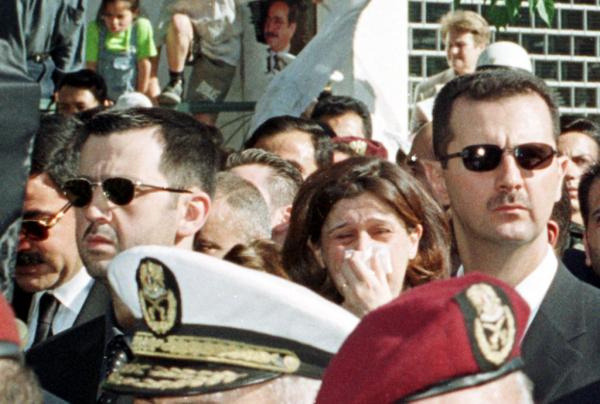
  • The Assad regime suffered one of its most public setbacks last month, when members of the Free Syrian Army successfully bombed a secret meeting of senior Syrian military officials. The attack claimed the lives of four people, including al-Assad’s brother-in-law, widely believed to be members of Assad’s inner circle. Now, reports suggest that the President’s brother Maher al-Assad — who gained notoriety after footage emerged of him allegedly firing on unarmed civilians during the early days of the Syrian uprising — may have lost his leg in the attack. If true, it would be the latest in a string of PR blows suffered by the regime. (Photo via syriana2011) source

Posted by ShortFormBlog • Permalink

Aug 14 2012t

Former Prime Minister: Bashar al-Assad losing grip on Syria

  • 30% of Syria under Assad’s control, former PM says source
  • » Possibly a low point? Riyad Hijab, who was the country’s prime minister between June and August of this year, strongly suggests that Assad’s regime is on the way to collapse. "Oh devoted revolutionaries, your revolution has become a model of effort and sacrifice for the sake of freedom and dignity,“ he says. "I assure you, from my experience and former position, that the regime is collapsing, spiritually and financially, as it escalates militarily.” In case you’re wondering how we got to this point, we highly recommend our Pitch piece, which breaks it down.

Posted by ShortFormBlog • Permalink

Aug 13 2012t

After months of non-violent protests

Understanding Syria’s civil war: From Aleppo to Zabadani

  • Hey, what’s going on? Here’s the latest entry in our weekly post series, “The Pitch.” This post, written by SFB’s very own Scott Craft (with additional research by Seth Millstein), takes a good, long look at the Syrian conflict, recapping the key points of an increasingly complex battle. Find Scott on Twitter over here, and Seth over here.
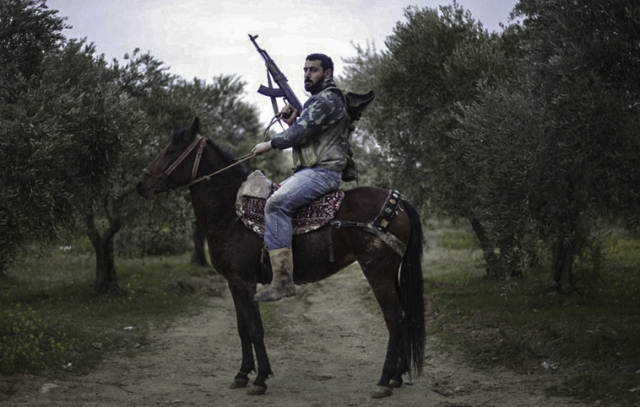
  • After months of non-violent protests against President Bashar al-Assad led to military crackdowns, Syria finds itself in the middle of a bitter civil war. Following several attempts to end the fighting peacefully, and more than a year of massive protests and guerilla-fighting across the country, the Free Syrian Army recently launched major offensives in the capital city of Damascus and coastal city of Aleppo — two of the oldest cities in the world. So where do things stand today, and how did we get to this point? Let’s take a look after the jump.

(Photo via FreedomHouse2)

A: Assad and the groups fighting against his rule

  • SNCA coalition of opposition groups, and exiled political opponents of the Assads, formed early in the uprising. So far, the Syrian National Council has only received recognition as the legitimate government of Syria by Libya’s National Transitional Council following the government escalation of violence.
  • FSAA coalition of local militias, military defectors, and volunteer fighters currently led by former officers of the Syrian army. The Free Syrian Army is estimated to have between 15,000-25,000 soldiers, and claims no political ambition other than Bashar al-Assad’s removal from power.
  • Assad Bashar al-Assad became Syria’s president following his father Hafez al-Assad’s death in June 2000. The Assad family has controlled Syria for over forty years, thanks in no small part to his status as one of the country’s minority Alawite population and a state-sponsored cult of personality.

C: Casualties caused by the Syrian conflict

  • 17,000+ reported killed, according to UN Secretary-General Ban ki-Moon
  • 21,000+ reported killed, according to the Syrian Observatory for Human Rights
  • » Fleeing Masses: With the situation on the ground worsening by the day, it would be nearly impossible to know the exact total number of Syrians displaced by fighting. Jordan is currently home to more than 150,000 refugees, with another 50,000 taking refuge in Turkey, and 18,000 just inside the Lebanese border. Hundreds of thousands more are estimated to have fled their homes, but remained inside the country, with early reports suggesting that more than 200,000 have fled Aleppo alone since fighting reached the city last month..

E: Early conflicts that led to all-out war

D: Deraa protests take a dark turn

  • 14 civilians killed by Syrian forces to quell protesters in Deraa
  • » Syria Reacts: Hundreds of Syrian youths marched in solidarity with the victims, but later found themselves under fire from security forces as well. Accusations of torture began to emerge from those who had been held captive for protesting, and anti-Assad sentiment continued to grow. As the number and sizes of public demonstrations grew, President Bashar al-Assad promised an end to the violence and the opening of a dialogue on potential political reforms. Unfortunately, Assad’s idea of working together apparently involved arresting protesters, raiding a university in Damascus, incarcerating journalists, firing governors in any region where protests remained, and ultimately a return to extreme violence.

O: Obstruction efforts against the Syrian uprising

  • Violent crackdowns continue: International support for Syrian opposition forces grew immensely following President Bashar al-Assad’s extremely violent attempts at suppressing any/all remaining protests. Hundreds of tanks were ordered into cities around the country. Massacres resulting in triple-digit death tolls have been reported in Houla, Tremseh and many other cities and towns across the country. The city of Homs found itself particularly devastated after regime forces bombarded the city for two months, spending nearly three weeks shelling only the district of Baba Amr. When it became clear that the Assad regime planned to retain control by any means necessary, those in opposition began to organize and arm themselves.

S: Social media becomes a key conflict tool

  • social media Social networks became an important tool for the uprising, with the opposition regularly using Twitter and Facebook to provide photographic evidence of the regime’s violent suppression
  • youtube The Free Syrian Army also became a fan of YouTube, forming its own channel on the video-hosting site, and using the platform to spread training materials to fighters stationed around the country.

I: International powers weigh in on the conflict

  • the west Following news of the massacres, many Western countries began examining methods to force President Bashar al-Assad out of office. Some countries have provided support to the rebels, the UK froze Assad family assets, and several nations pushed for additional UN sanctions against the regime which never came to pass.
  • russia Russia remains the most outspoken ally of Syria, and has vowed to prevent it from becoming “the next Libya.” Russia has refused to stop selling weapons to the Assad regime, which many speculate is an effort to recoup nearly $4 billion in lost contracts after new arms embargoes were placed on Libya after the fall of Gadhafi.
  • china Along with Russia, China has vetoed any/all efforts to place additional UN sanctions on Syria or the al-Assad family, and continues to ask the international community to pressure rebel forces in addition to al-Assad. Chinese officials say that rebel forces are as much to blame for the violence as the Syrian government.

W: War crime allegations emerge from rebel groups

  • Two sides to every story: As international demands for Bashar al-Assad to step down grew exponentially following news of the massacres, several human rights organizations warned that pro-Assad forces have not been the only guilty parties. Fighters under the Free Syrian Army banner have been accused of kidnapping, torturing, and executing anyone who is — or in some cases simply suspected to be — loyal to President Bashar al-Assad. And the charges aren’t just being leveled by those loyal to the current regime either. Internationally renowned groups like Human Rights Watch have documented similar crimes. Some believe the crimes expose a much weaker central command than the image the FSA presents to the outside world. Others blame the involvement of groups like Jabhat al Nusra — the “Solidarity Front” — the local al-Qaeda affiliate which is extremely active along on the war’s eastern front.

O: Opposition groups fight amongst themselves

When we attacked the base with the FSA we tried everything and failed. Even with around 200 men attacking from multiple fronts they couldn’t injure a single government soldier. … The car bomb cost us 100,000 Syrian pounds and fewer than 10 people were involved…We didn’t waste a single bullet.

Abu Khader, Syrian al-Qaeda officer • Explaining why he left the Free Syrian Army, after initially joining as a Syrian army defector, after terrible experiences fighting alongside the FSA during the liberation of Mohassen. Although he is no longer a member, Khader says that his men regularly support the Free Syrian Army — primarily through the manufacturing of car bombs and IEDs — though he does not hide that Jabhat al Nusra’s ultimate goal is to see the creation of “an Islamic state and not a Syrian state.” Similar claims about the inefficiency of the Syrian National Council have also been voiced by former members as well.

F: Failed efforts to bring the peace

This image has been lost

  • Peace Talks Fail: After the Arab League was unable to broker a permanent end to hostility, and additional sanctions were blocked by permanent UN Security Council members Russia and China, both organizations asked former Secretary-General Kofi Annan to step-in as a special envoy and attempt to restart peace talks. Although it looked like Annan might make headway, his negotiated ceasefire crumbled within hours, and may have never truly started according to some reports. After months of further negotiations still did not yield results, Annan resigned from his post. Many believe that his departure was directly related to regular double-vetoes of proposed UN sanctions by Russia and China, after a spokesman told reporters that Annan was “disappointed that at this critical stage the U.N. Security Council could not unite and take the strong and concerted action he had urged and hoped for." (Photo via World Economic Forum)

P: Public relations losses for the Syrian government

  • four top-level defense officials were killed after members of the Free Syrian Army successfully detonated explosives below what was thought to be a secret meeting of senior government officials
  • nine senior Syrian officials have also defected from the al-Assad regime, choosing a combination of exile and alignment with the Free Syrian Army and Syrian National Council
  • » So who crossed lines? Prime Minister Riad Hijab, formerly a high-ranking member of President al-Assad’s Ba'ath Party, has been the highest-ranking defector to date. Prior to Hijab, Syria’s ambassadors to Cyprus, Iraq, and the United Arab Emirates all defected as well. Several high-ranking military officers also made the jump, including Colonel Riyad al-Assad who currently commands the Free Syrian Army. Though not a high-ranking official, Colonel Hassan Hammadeh, a former member of the Syrian Air Force, also made headlines recently with his defection after flying his jet across the Jordanian border and requesting political asylum.

H: High-profile hacking embarrasses Syria

  • hackedThe infamous collective Anonymous officially joined the fight for Syria in February 2012, breaking into the email accounts of 78 senior government officials as well as their closest advisers.
  • exposed The hack exposed the regime's extremely-weak security, the true nature of Asma al-Assad, and many other details which the Assads clearly did not expect to see the light of day.

N: New battlegrounds emerge in Syria

We could not endure anymore. We have been deprived of everything. They have burnt our homes and have deprived us of our livelihood.

Ahmad Shaaban, grocer from the Alepo district of Salaheddine • Discussing conditions in the city of Aleppo, following nearly a month’s worth of battles between rebels and pro-Assad forces over control of the city, with a Reuters reporter at Syria’s border with Turkey. The battle for Aleppo continues, though regional opposition commander Abdel Aziz-Salameh told reporters that rebel forces are beginning to run low on ammunition on Monday. Even as many began to doubt the rebels’ ability to overthrow Bashar al-Assad, opposition forces stormed the capital of Damascus after months of coordination with sleeper groups inside the city. Fighting has continued for 30 days, and has renewed international calls for a no-fly zone following Assad’s decision to use Syria’s air force to bombard fighters inside the city.

W: What comes next?

  • The Battle Rages On: Heavy fighting continues in the coastal city of Aleppo, and the capital city of Damascus. As opposition forces continue to gain ground, so too do some of the allegations of war crimes — by both sides. With the United States looking to expand its backing of the Syrian opposition and its efforts to weaken the Assad government — while avoiding taking direct part in the conflict, as they did in Libya — the dynamic of the conflict could change significantly in the next few months. Nearly eighteen months later, could the Assad government topple like other nations affected by the Arab Spring?

Scott Craft is a writer for ShortFormBlog. (He’s a good writer, and he’s always looking for freelance work!) You can find his personal Tumblr, ”Manic, Chill,“ over here.

Posted by ShortFormBlog • Permalink

Aug 6 2012t

He was given two options: to either take the office of prime minister or be killed. He had a third option in…

He was given two options: to either take the office of prime minister or be killed. He had a third option in mind: to plan his own defection in order to direct a blow to the regime from within, and today, he is declaring his defection.

— A spokesman for Riyad Hijab, who defected today from his post as Syrian Prime Minister • Hijab, a former agricultural secretary, was named Prime Minister in June, but according to his spokesman, he’d planned his defection since before then. One thing to keep in mind: While it’s impossible to know for sure, many of these high-level Syrian defections are likely as much a result of pragmatism–that is, the recognition that the al-Assad regime will soon fall–as they are the result of moral objections to the regime’s actions. source ( source • source)

Posted by ShortFormBlog • Permalink

Aug 3 2012t

The focus two weeks ago was on Damascus. The focus is now on Aleppo, where there has been a considerable…

The focus two weeks ago was on Damascus. The focus is now on Aleppo, where there has been a considerable build-up of military means, and where we have reason to believe that the main battle is about to start.

— UN Under-Secretary-General for Peacekeeping Operations Herve Ladsous • Discussing the current military situation in Syria — suggesting a major battle in Aleppo is coming soon. In related news, three Russian landing ships, each carrying 120 marines, are heading to the Syrian port of Tartus to restock supplies for the base. Russia had previously offered to send ships to the base for protection purposes.

Posted by ShortFormBlog • Permalink

Aug 2 2012t

Head of Syrian peace effort resigns, but don't be too hard on him

  • No more Annan: Kofi Annan, the diplomat tasked by both the United Nations and the Arab League with ending the violence in Syria, has decided to resign his post. Annan had proposed a peace plan for the country, but the first step of that plan–a ceasefire–fell apart within days, and his subsequent efforts to quell the violence failed. This departure may tarnish Annan’s legacy…but it shouldn’t. Absolutely nobody has been able to make any headway whatsoever in resolving the Syrian mess; the violence has perpetuated for sixteen months, and even seems to be getting worse as of late. Perhaps Annan could have come up with a different or better plan, but there’s little reason to expect that would have worked, either. When you can’t even get two sides of a conflict to stop shooting each other, it’s hard to expect a political dialogue to take hold. source

Posted by ShortFormBlog • Permalink

Aug 1 2012t

Reuters reports that President Obama has signed a secret order allowing the U.S. to provide support to Syrian…

Obama’s order, approved earlier this year and known as an intelligence “finding,” broadly permits the CIA and other U.S. agencies to provide support that could help the rebels oust Assad.

This and other developments signal a shift toward growing, albeit still circumscribed, support for Assad’s armed opponents - a shift that intensified following last month’s failure of the U.N. Security Council to agree on tougher sanctions against the Damascus government.

The order stops just short of having the U.S. give rebels weapons.

Posted by ShortFormBlog • Permalink

Jul 22 2012t

The Daily Telegraph has acquired

Before he was infamous: Assad family photos show different side of leader

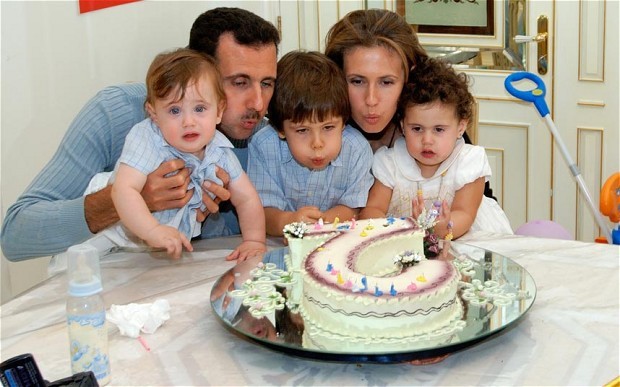
The Daily Telegraph has acquired photos of Syria’s Bashar al-Assad with his family, taken five to seven years ago, when he was perceived as a different type of leader than people see him now. “Unseen by the photographer, and by most visitors to Syria,” writes reporter Nick Meo, “were the torture chambers, tanks and chemical weapons that the family relied on to maintain their brutal rule.” It’s unlikely Assad’s family life looks anything like this these days. (photo by Camera Press)

Posted by ShortFormBlog • Permalink

Jul 19 2012t

A day after the bombing

“Liberation of Damascus” enters fifth day of fighting

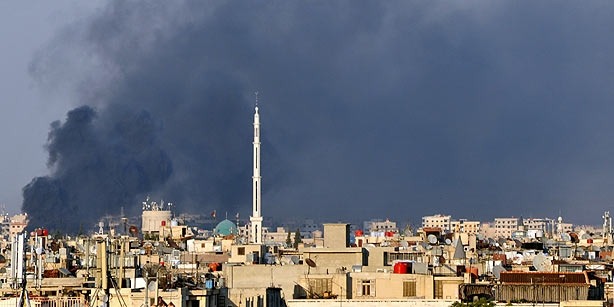
  • A day after the bombing which claimed the lives of three top-level Syrian officials, including President Bashar al-Assad’s brother-in-law, the battle of Damascus continues unabated. Rebels and human rights organizations worry that the government is planning another civilian massacre after state television broadcast a warning that impostors in Republican Guard uniforms were roaming the city and killing residents. On the diplomatic front, China and Russia once again vetoed a UN resolution to place sanctions on the Syrian government; however, an aide to Russian President Vladimir Putin said that Russia isn’t planning to offer asylum to Assad. (Photo via NewsPano) source

Posted by ShortFormBlog • Permalink